At Booth Orthodontics, we believe early orthodontic care should be simple, efficient, effective, and evidence-based. This article is the first in a short series exploring how and why early treatment — often called Phase 1 — can benefit children between ages 7 and 11. Our goal is to help families in our community understand when early treatment would benefit their child, and just as importantly, when it’s best to wait.
The American Association of Orthodontists (AAO) recommends that a child’s first visit to the orthodontist be around age 7-8. At Booth Orthodontics, we only recommend early treatment when it can make a meaningful difference. When early care isn’t needed, we simply place patients in our observation program and see them every year or so to monitor growth, tooth eruption, and jaw development. But when early treatment is indicated, one of the most effective tools we use is the expander.
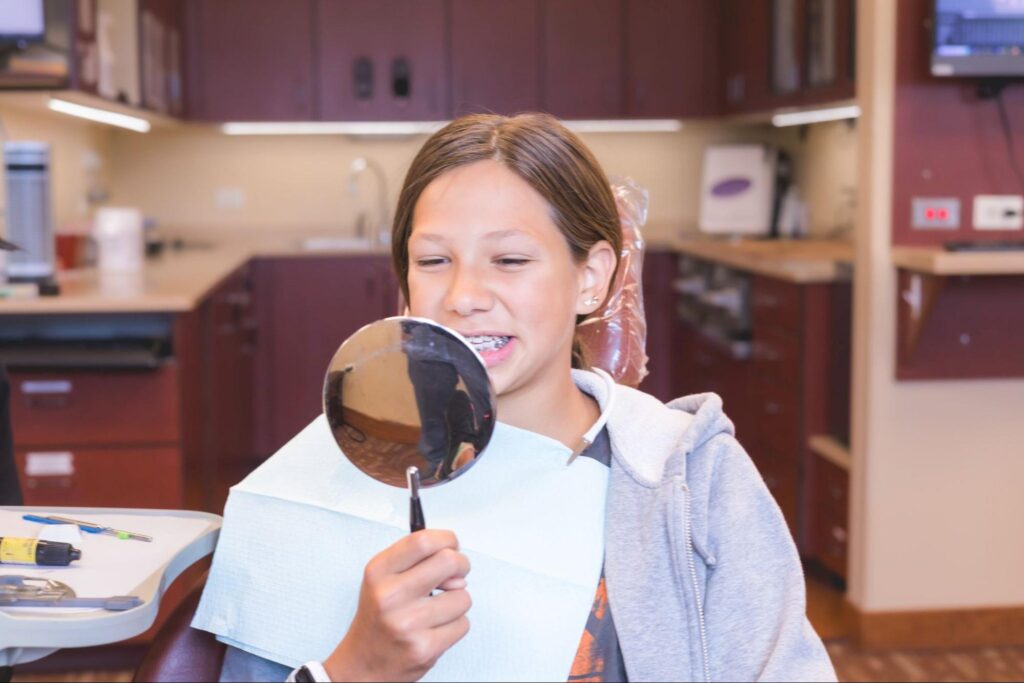
What an Expander Does — and Why It Works So Well
An expander is a non-removable appliance that gently widens the upper jaw while a child is still growing. The middle part of the upper jaw bone gradually fuses during adolescence, which means this correction can only be achieved at younger ages, usually between ages 7-11. When done at the right time, expansion is incredibly predictable, comfortable, and effective.
At Booth Orthodontics, we most commonly use expanders to address:
- Posterior crossbite – when the upper back teeth bite inside the lower teeth
- Significant upper crowding – expanders create more space for adult teeth to erupt
Posterior crossbites can create an uneven bite in the long run, and upper crowding might not allow all the adult teeth to erupt in the right place. Expansion widens the jaw and creates space naturally, guiding growth rather than trying to “fix” things later after growth is complete.
Comfortable, Kid-Friendly Treatment
Our expanders are custom-designed using digital scans rather than old-fashioned impressions, making the process more comfortable and much easier for kids. Because expanders are non-removable, families don’t have to worry about cooperation, misplacing the appliance, or accidental breakage.
A typical expansion phase lasts 6 months, depending on the amount of correction needed. Parents activate the expander at home following simple instructions we review together when the expander is delivered.
Setting Kids Up for Success in Phase 2
One of the most important things we emphasize is transparency: an expander is usually the first step, not the last. Even after Phase 1 treatment, most children benefit from a second phase of comprehensive orthodontics once all adult teeth are in, usually around age 12-13.
But early expansion makes that second phase simpler and more predictable, and helps prevent future complications.
Looking Ahead
In the next article of this series, we’ll continue exploring Phase 1 orthodontics and the tools we use to support healthy teeth and bites in growing children. If you’re unsure whether your child may benefit from an early evaluation, schedule a free consultation today.