If your child’s dentist mentioned a palatal expander, or you’re an adult curious about widening a narrow upper jaw, you probably have questions about palatal expanders. Lots of them. This guide walks you through how expanders work, who benefits, what treatment feels like day to day, and what to expect from start to finish.

Introduction: What Is a Palatal Expander?
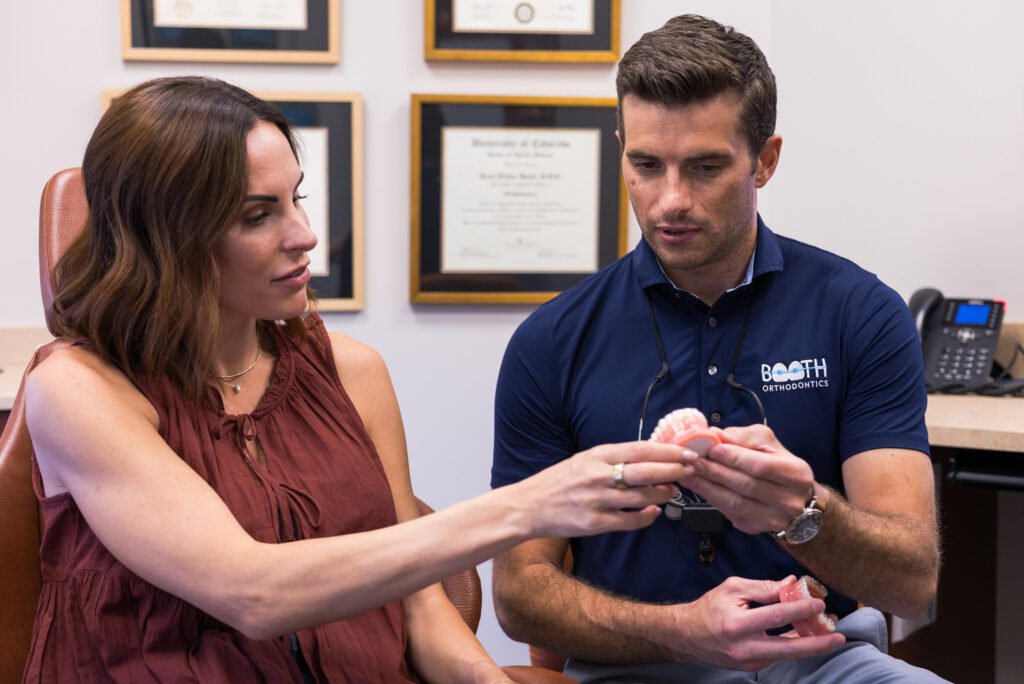
A palatal expander is a small orthodontic appliance that gently widens the upper jaw over time. It attaches to the upper back teeth and uses steady, controlled pressure to guide the two halves of the palate apart, creating more room for teeth to come in straight and for the bite to fit together properly.
Orthodontists recommend expanders for a wide range of reasons, from correcting a crossbite to making space for crowded or impacted teeth. In this guide, we’ll cover how expanders work, the different types available, the best age for treatment, what a typical timeline looks like, insurance & finances, and answers to the questions our patients ask most. Expanders are one of the most common early treatments in orthodontics, and the results can be truly life-changing for a growing smile.
Curious whether an expander is the right next step? Schedule your FREE consultation today with your Homer Glen orthodontist.
How Palatal Expanders Work
The upper jaw is made of two bones that meet in the middle at a growth line called the midpalatal suture. In kids and younger teens, that suture hasn’t fully fused, which means an expander can gently guide the bones apart. In adults, the suture is fused, so your orthodontist may recommend a slightly different approach (more on that below).
Here’s how the process typically works:
- Placement. Your orthodontist fits the expander to the upper back teeth using bands or bonded pads.
- Daily activation. A small key is used to turn a screw in the center of the appliance, usually once or twice a day.
- Gradual widening. Each turn adds a tiny amount of pressure, slowly separating the two halves of the palate.
- New bone forms. As the gap widens, your body fills it in with fresh bone during the retention phase.
- Stabilization. The expander stays in place for several months so the new bone can strengthen.
Rapid expansion moves the palate faster with more frequent turns, while slow expansion uses gentler forces over a longer period. Your orthodontist will recommend the approach that fits your case best.
Who Needs a Palatal Expander?
Expanders solve more than just narrow smiles. Your orthodontist may suggest one if there’s:
- A crossbite, where the upper teeth sit inside the lower teeth when biting down (either in the back or the front)
- A narrow upper jaw or high, arched palate that limits tongue space
- Dental crowding with not enough room for permanent teeth to erupt properly
- Impacted teeth, especially the upper canines, that need space to come in
- Breathing concerns connected to a narrow palate, such as mouth breathing or restricted nasal airflow
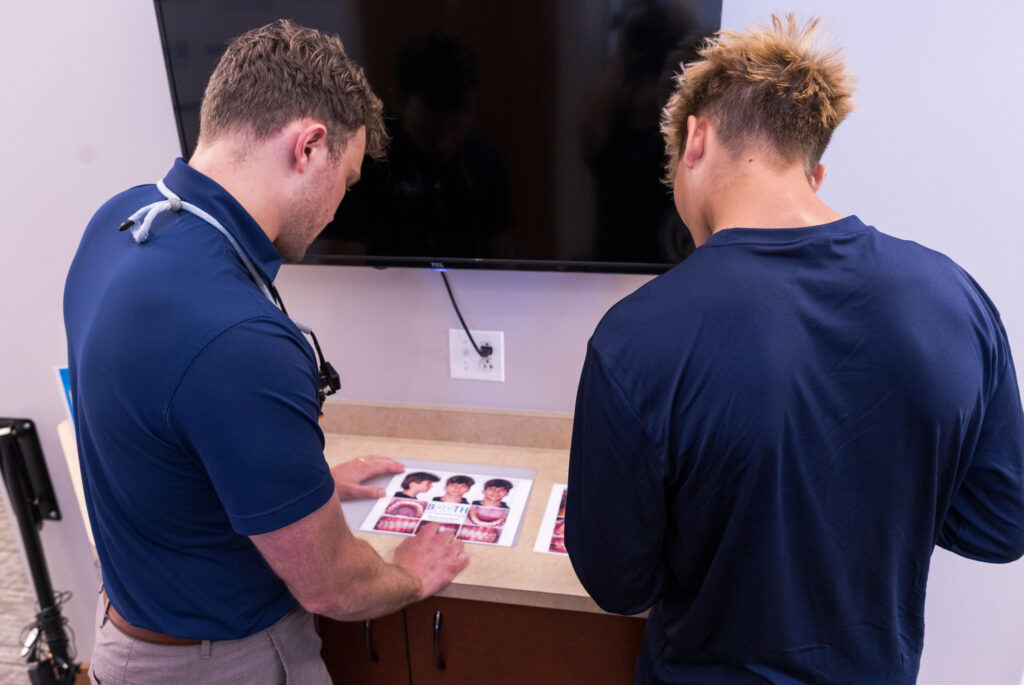
Every case looks different, which is why a personalized evaluation matters. Painless and goop-free digital pictures help your orthodontist see exactly what’s happening beneath the surface.
Types of Palatal Expanders
Here are the main options your orthodontist might mention:
| Type | Best For | Typical Duration |
|---|---|---|
| Rapid Palatal Expander (RPE) | Kids, fixed to upper molars | A few weeks active expansion |
| Slow palatal expander | Certain growth patterns, gentler force | Longer active phase |
| Removable expander | Milder cases, older kids | Depends on compliance |
| Surgically-Assisted RPE (SARPE) | Adults with fused suture | Weeks after minor oral surgery |
| MSE (Miniscrew-Assisted RPE) | Teens and adults, non-surgical | A few weeks to a few months |
- Rapid Palatal Expander (RPE). A fixed appliance bonded or banded to the upper molars. It’s the most common choice for kids and works quickly, usually completing active expansion in a few weeks.
- Slow palatal expander. Similar in design, but activated less often. This gentler approach can be a great fit for certain growth patterns.
- Removable expander. Looks a bit like a retainer with a screw in the middle. Best for milder cases and older kids who can be trusted to wear it consistently.
- Surgically-Assisted Rapid Palatal Expander (SARPE). An adult option that combines a fixed expander with a minor oral surgical release of the fused suture, performed by an oral surgeon.
- MSE (Miniscrew-Assisted Rapid Palatal Expander). A modern favorite for teens and adults. Tiny mini-screws anchor the expander directly to the bone, often allowing non-surgical expansion even after the suture has fused.
Your orthodontist will match the appliance to your age, anatomy, and treatment goals.
Best Age for Treatment (Kids vs Adults)
The ideal window for palatal expansion is typically ages 7 to 14, while the palate is still growing and flexible. The American Association of Orthodontists recommends every child have a first orthodontic evaluation by age 7 to catch issues like crossbites and narrow arches early, when they’re easiest to correct.
That said, adults absolutely have options. Modern MSE appliances have made non-surgical expansion possible for many grown-up patients, and SARPE remains a reliable route for more complex adult cases. The earlier expansion is done, the more predictable the outcome tends to be, but there’s no strict cutoff.
Wondering if expansion is right for your child or for you? Contact our Homer Glen office to learn if a palatal expander is a good fit.
What to Expect During Treatment: Week-by-Week Timeline
Every treatment is a little different, but here’s a realistic look at what most patients experience.
Week 1: Getting used to the expander. The first few days often bring some pressure, extra saliva, and a temporary lisp. Soft foods help. Most kids adjust within a week.
Weeks 2 to 4: Active expansion begins. Daily key turns start creating gentle pressure. You might notice a small gap opening between the two front teeth. That’s a good sign, it means the expander is doing its job.
Weeks 5 to 12: Expansion completes and stabilizes. Once your orthodontist confirms enough width has been achieved, the turning stops. The gap between the front teeth typically starts to close on its own as the teeth drift together.
Months 4 to 6: Retention phase. The expander stays in place while new bone fills the gap in the palate. Removing it too early would let the expansion relapse.
Call your orthodontist if you notice loose bands, sharp discomfort that doesn’t fade, or if a key turn feels stuck.
How to Care for a Palatal Expander
Daily habits keep the appliance clean and treatment on track:
- Brush carefully around the bands and along the roof of the mouth. An angled toothbrush helps.
- Use a water flosser to blast food and plaque out of the tight spaces the expander creates.
- Rinse after every meal to prevent food from sitting under the appliance.
- Skip sticky, hard, and chewy foods. Think caramels, ice, popcorn, hard candy, and crusty bread.
- Stay on schedule with daily activations.
Here’s a simple way to turn the key:
- Sit your child in a well-lit spot, tilted slightly back so you can see the screw in the roof of the mouth.
- Insert the key firmly into the small hole in the center of the expander.
- Push the key toward the back of the mouth in one smooth motion until the next hole appears at the front.
- Gently remove the key by sliding it out toward the back, being careful not to reverse the turn.
- Mark the turn on a calendar so you don’t lose track.
If a turn ever feels stuck, or you can’t see the next hole, stop and call your orthodontist.
Common Side Effects and Discomfort
Do palatal expanders hurt? Honestly, no, not in the way most parents worry about. Kids usually feel pressure or a tingling sensation right after a turn, which fades within 5 to 10 minutes. It’s more of an unusual feeling than true discomfort.
Other common (and totally normal) side effects include:
- A temporary lisp or funny-sounding “s” as the tongue learns to work around the appliance
- Extra saliva for the first few days
- A gap opening between the two front teeth, which closes naturally after expansion ends
- Mild soreness the first day or after the initial placement
For tender days, soft foods, cool drinks, and age-appropriate over-the-counter options (as directed by your pediatrician or orthodontist) usually do the trick. Most kids are back to normal eating within a week.
Treatment Duration and Long-Term Results
How long do you wear a palatal expander? Most patients wear one for about 6 to 9 months total. Active expansion, the phase with daily key turns, usually takes 2 to 12 weeks depending on the type of appliance and how much widening is needed. After that comes a retention phase of roughly 4 to 6 months, when the expander stays in place so fresh bone can form and stabilize the new width.
Many kids move into braces or clear aligners afterward to finish aligning the teeth. Because expansion creates a broader foundation, the follow-up treatment often goes more smoothly. Once growth is complete and the retention phase is finished, the new width holds well.
Frequently Asked Questions
How long do you wear a palatal expander?
Most patients wear an expander for about 6 to 9 months. Active expansion (the daily key turns) usually lasts a few weeks to a few months, followed by a retention phase of roughly 4 to 6 months so the new bone can strengthen before the appliance is removed.
Do palatal expanders hurt?
No, expanders aren’t painful. Kids often feel pressure or a tingling sensation right after a key turn, but it typically fades within 5 to 10 minutes. Most patients adjust within a week and go about their days normally.
Can adults get a palatal expander?
Yes. Adults have modern options like MSE (Miniscrew-Assisted Rapid Palatal Expander), which uses tiny bone anchors to allow non-surgical expansion in many cases. For more complex situations, SARPE combines an expander with a minor oral surgical release for reliable results.
What happens if you don’t turn the expander?
Skipping turns slows down treatment and can extend how long the expander needs to stay in. If you miss a day, don’t double up. Just get back on schedule and let your orthodontist know at the next visit so they can adjust the plan if needed.
Will my child need braces after the expander?
Often, yes. Expanders create the foundation of space and proper bite width, but braces or clear aligners typically follow to finish aligning the individual teeth. The good news is that treatment after expansion is usually more efficient because the groundwork is already in place.
Conclusion and Next Steps
Palatal expanders correct bites, create space for crowded teeth, and can even improve breathing and long-term jaw development. Here’s the quick recap:
- Early evaluation (by age 7, per the AAO) leads to the most predictable outcomes
- Kids benefit most while the palate is still growing
- Adults have excellent modern options like MSE and SARPE
- Treatment is usually comfortable, quick, and highly effective
At Booth Orthodontics in Homer Glen, we’ve been making you smile since 1986, and we believe everyone deserves a beautiful smile, no matter their age. Dr. Ryan Booth and Dr. Evan Booth, our Homer Glen orthodontists, will walk you through your options, answer every question, and help you decide what’s right for your family.
Let’s do this. Book an evaluation with Booth Orthodontics in Homer Glen to discuss expansion options and take the first step toward a healthier, more confident smile.