So you’ve decided to straighten your smile with clear aligners. Now what? Getting Fitted for Clear Aligners is the exciting step where your custom trays actually meet your teeth for the first time. At Booth Orthodontics in Homer Glen, we’ve guided thousands of our patients through this process, and we want you to walk in feeling informed and confident.
This guide walks you through every part of the fitting visit, from digital scans to that very first week wearing your trays. Let’s dig in.
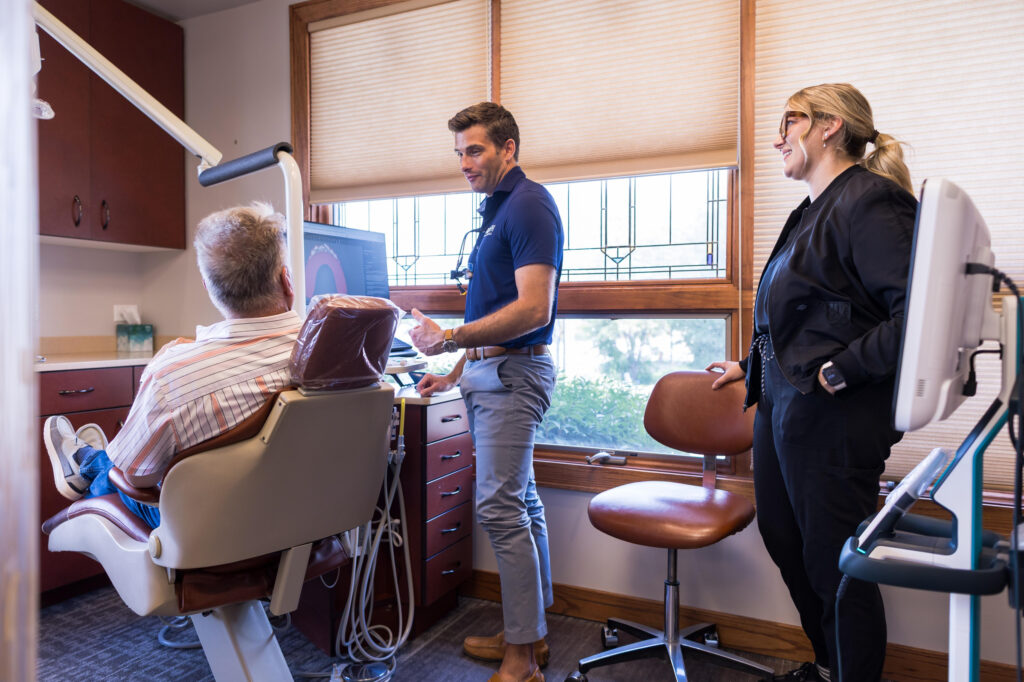
What Does “Getting Fitted” for Clear Aligners Mean?
Getting fitted for clear aligners is the visit where your first set of custom trays is delivered and seated on your teeth. Your orthodontist checks the fit, bonds any needed attachments, and teaches you how to wear and care for your aligners. This visit is different from your initial consult and your scan visit.
At Booth Orthodontics, we rely on painless and goop-free digital pictures to design your trays long before fitting day. Here’s how the three visits break down:
- Free consult: Your orthodontist evaluates your smile and discusses treatment options.
- Digital scan visit: We capture a 3D map of your teeth to design your aligner series.
- Fitting visit: Your trays arrive, attachments are placed, and you start wearing them.
Your fitting visit usually takes 30 to 60 minutes. During that time, we may also bond tooth-colored attachments and perform light interproximal reduction (IPR) if your plan calls for it. A proper fit is what allows your teeth to track the way your treatment plan predicts, so this visit really matters.
How the Clear Aligner Fitting Process Works
The Invisalign fitting process at our Homer Glen office follows a clear sequence. Each step builds on the last to make sure your trays fit snugly and your teeth move on schedule.
- Digital scan. We use an iTero-style 3D scanner to capture every tooth surface. No goopy trays, no gagging, just quick and accurate digital scans for aligners.
- Treatment plan review. Your orthodontist walks you through a 3D preview of your projected results. You’ll see your starting smile, each stage of movement, and the final outcome before you commit.
- Attachment bonding. Small tooth-colored bumps, called clear aligner attachments, are bonded to specific teeth. They give the trays something to grip so your aligners can rotate, tip, and move teeth precisely.
- Interproximal reduction (IPR), if needed. For some cases, we gently polish a tiny amount of enamel between certain teeth. This creates the space your teeth need to shift into alignment.
- First aligner seated. Your orthodontist places tray number one and checks the fit. You’ll practice inserting and removing the trays, and we’ll show you how to use a chewie, which is a small foam cylinder that helps seat aligners fully.
- Tray series dispensed. You go home with several trays in hand plus clear instructions. Most patients change trays every 1 to 2 weeks and wear each set for 20 to 22 hours a day.
By the end of your clear aligner fitting visit, you’ll know exactly how to care for your trays and what to expect over the coming weeks.
Benefits of a Professional In-Office Fitting
A professional fitting makes a real difference in how your treatment unfolds. When trays fit right from day one, teeth move on schedule and the whole experience feels smoother. Here’s what our patients gain from an in-office fitting with a trained orthodontist:
- Precise 3D scans. Digital scans capture your bite in fine detail, so your trays fit snugly without gaps or pressure points.
- Expertly placed attachments. Attachments only work when they’re bonded in exactly the right spot. A trained orthodontist places them with accuracy that mail-order services simply can’t match.
- In-person fit check. We confirm every tray seats fully before you leave. Poor seating is one of the top reasons treatment stalls, and catching it early keeps you on track.
- Doctor-supervised plan. Because your orthodontist designs and monitors your plan, you’re far less likely to need refinements at the end.
- Immediate troubleshooting. Any concerns about speech, comfort, or tracking get addressed on the spot. You’re not left searching online for answers.
- Coordinated care. Advanced CBCT imaging catches root positioning and bite concerns that DIY brands miss entirely. That means safer, healthier movement from start to finish.
Why Do Precise Scans Matter?
Scan quality is the foundation of your entire treatment. When a 3D scanner captures the exact contours of every tooth, the lab can design trays that fit flush against enamel with no rocking or lifting. Even a tiny inaccuracy in the starting scan can snowball into tracking problems weeks later, which is why trained hands and professional equipment matter so much. A precise scan also lets your orthodontist map out each micro-movement with confidence, predicting how your teeth will respond at each stage. That predictability shortens your total treatment time and reduces the need for mid-course corrections.
How Does Doctor Supervision Improve Outcomes?
Doctor supervision turns a good plan into great results. During regular check-ins every 6 to 10 weeks, your orthodontist confirms that your teeth are moving on schedule and spots any tray that isn’t seating fully. If something looks off, adjustments happen immediately, whether that means adding an attachment, modifying an aligner, or ordering a refinement set. That hands-on oversight is something remote services simply cannot replicate. Patients also benefit from in-person screenings for gum health, decay, and bite shifts, which protect your long-term oral health while your smile straightens.
What Makes an In-Office Experience Different?
Beyond the clinical advantages, an in-office fitting gives you a real relationship with a team that knows your smile. You can ask questions face-to-face, get hands-on coaching with your trays, and feel confident that someone is watching out for you at every step. Booth Orthodontics has been making you smile since 1986, and that experience shows up in every fitting we perform. Our doctors take time to explain each step so you never feel rushed or confused.

In-Office Fitting vs. Mail-Order Aligners
Not all clear aligner experiences are the same. Mail-order companies promise convenience, but they skip steps that matter for safe, predictable tooth movement. Here’s a side-by-side look:
| Feature | In-Office Fitting | Mail-Order Aligners |
|---|---|---|
| Scan quality | Hands-on 3D digital scan by trained staff | At-home impression kit or remote scan |
| Attachments | Placed by orthodontist for precise movement | Rarely used, limiting case complexity |
| IPR | Performed in office when needed | Not available |
| Supervision | Doctor check-in every 6 to 10 weeks | Remote photo reviews only |
| Safety screening | In-person exams catch decay, gum concerns, and bite issues | No clinical exam before treatment |
| Case complexity | Treats mild to complex cases | Limited to minor spacing or alignment |
| Real-time adjustments | Immediate fixes for tracking or fit issues | Delays while messages go back and forth |
Specialized orthodontic training shapes every case we see. A mail-order service can’t physically check your bite, screen for gum health, or adjust your plan when your teeth move differently than predicted. That hands-on care is what turns a good treatment plan into great results.
Who Is a Good Candidate for Clear Aligners?
Clear aligners work beautifully for a wide range of smiles, but they aren’t the right fit for every case. A quick evaluation helps determine whether aligners or another treatment option will give you the best outcome.
You may be a strong candidate if:
- You have mild to moderate alignment, spacing, or bite concerns.
- Your teeth and gums are healthy before treatment starts.
- You can commit to wearing your trays 20 to 22 hours per day.
- You’re a teen or adult with fully erupted permanent teeth.
Clear aligners may not be ideal if:
- You have severe bite misalignment or very large gaps.
- Your case involves complex tooth rotations that respond better to braces.
- You aren’t ready to commit to consistent daily wear.
A free consult includes a visual exam and, when helpful, CBCT imaging to check root positioning and jaw structure. Your orthodontist will review the results with you and recommend the treatment option that fits your goals best, whether that’s Invisalign, clear braces, or metal braces. This is also a great time to ask any lingering questions about timing, lifestyle fit, and what to expect day to day.
Frequently Asked Questions About Getting Fitted for Clear Aligners
How long does the clear aligner fitting visit take?
Most fitting visits run between 30 and 60 minutes. The exact length depends on how many attachments need to be bonded and whether IPR is part of your plan. We take the time to make sure every tray seats properly and that you leave feeling confident about your routine.
Do I get my first aligner the same day as my scan?
No, your first aligner is delivered at a separate fitting visit after your trays are manufactured. The digital scan happens first, then your custom trays are designed and fabricated. Once they arrive at our office, we’ll schedule your fitting visit, usually within a few weeks.
How uncomfortable is wearing Invisalign after the fitting?
Most of our patients feel pressure or mild soreness during the first few days of each new tray, especially during the first week with clear aligners. This is a sign your teeth are responding to the gentle forces that move them into alignment. The tenderness typically fades within 2 to 3 days as your mouth adjusts.
What are attachments and will I need them?
Attachments are small tooth-colored bumps bonded to specific teeth to give your aligners better grip. They allow your trays to rotate, tip, or move teeth in ways that would otherwise be difficult. Most cases use at least a few attachments, and they’re removed when your treatment is complete.
How do I know if my aligner is seated correctly?
A properly seated aligner should sit flush against your teeth with no visible gaps at the edges. If you see space between the tray and your tooth, use a chewie for a few minutes to help it settle. If the gap persists after a day or two, give us a call so we can take a look.
Are clear aligners better than braces for my case?
It depends on what your smile needs. Clear aligners excel at mild to moderate corrections and offer the convenience of being removable. Braces may be a better choice for complex rotations or significant bite work. Your orthodontist will recommend the option that delivers the best outcome for your specific situation. If you’re still weighing your options after reading through these answers, a free consult is the easiest way to get personalized guidance from a specialist who can see your smile firsthand and walk you through everything step by step.
Related Pages: Orland Park Invisalign | Invisalign Lockport