Choosing the right orthodontic treatment can feel like a big decision, and it should. Today’s patients have more options than ever before when it comes to the different types of braces, including classic metal brackets, tooth-colored ceramics, hidden lingual systems, and nearly invisible aligners that fit into any lifestyle. Booth Orthodontics offers several treatment options because everyone deserves a beautiful smile, and no two smiles are the same.
This guide walks you through each type of braces available today. You’ll learn how they work, who they’re best for, and how to decide which option fits your goals.

What Are the Different Types of Braces?
Braces are orthodontic appliances that gradually shift your teeth into proper alignment using constant, gentle pressure over time. Today, there are five main types to choose from: metal braces, clear braces, self-ligating braces, lingual braces, and clear aligners like Invisalign. Each option uses different materials and mechanics, but all deliver beautifully straight results.
Orthodontic technology has advanced significantly, with smaller brackets, smoother wires, and 3D digital planning replacing the bulky hardware of decades past. You now have real choices based on how much visibility you’re comfortable with, your daily habits, and the complexity of your bite. Adults now make up roughly 1 in 4 orthodontic patients today, per the AAO, and that shift has pushed innovation toward more discreet, lifestyle-friendly options.
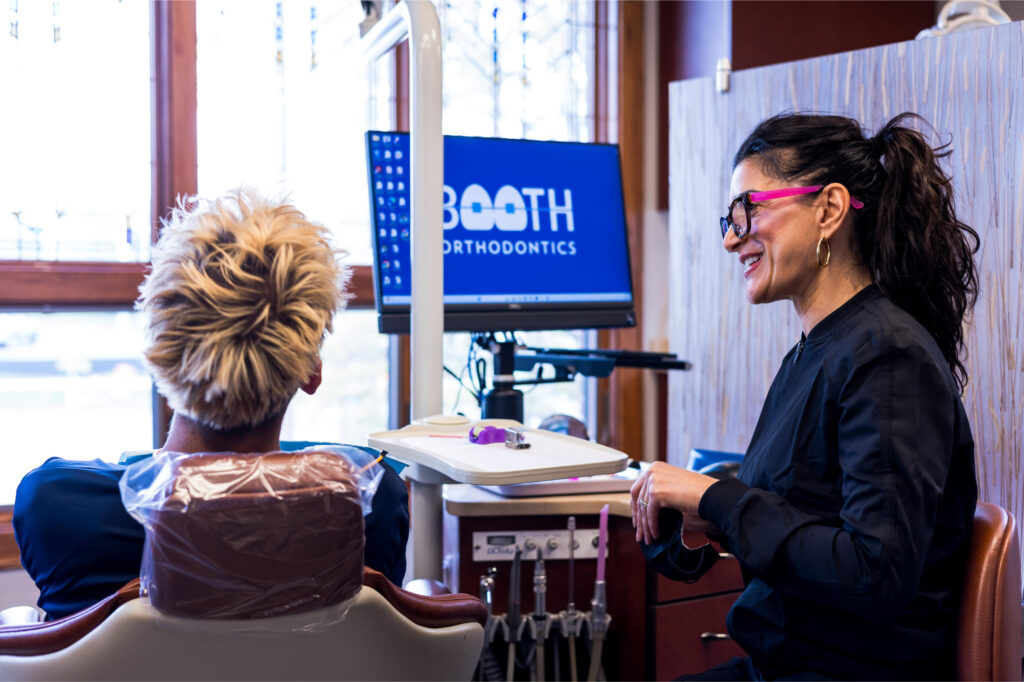
As a family practice making you smile since 1986, our team pairs each patient with the right treatment for the right person. Dr. Ryan Booth and Dr. Evan Booth take the time to understand your priorities before recommending an option. Whether you want something classic and effective or something nearly invisible, there’s a solution built for you.
How Each Type of Braces Works
All braces rely on the same core principle: continuous, controlled force reshapes the bone around your teeth and shifts them into position. What makes each type different is how that force is applied. Take a closer look at each option below.
- Metal braces: Stainless steel brackets are bonded directly to the front of each tooth. A thin archwire runs through the brackets and is held in place by small elastic ligatures (the colorful ties patients often choose). Your orthodontist adjusts the wire during regular visits to guide teeth into their new positions.
- Clear braces: These work exactly like metal braces, but the brackets are made from tooth-colored ceramic that blends in with your natural enamel. You get the same reliable results with a much more subtle appearance.
- Self-ligating braces: Instead of elastic ties, these brackets use a built-in clip or door mechanism to hold the archwire in place. That means less friction on the teeth, fewer parts to keep clean, and often fewer adjustment visits.
- Lingual braces: These custom brackets are bonded to the back surfaces of your teeth (the tongue side), making them completely hidden from view. Because they’re custom-made for each patient, they require specialized training and technology to place.
- Clear aligners (Invisalign): Rather than brackets and wires, Invisalign uses a series of removable, custom-molded clear trays. You wear each tray for about one to two weeks before switching to the next in the series. Digital scans (no goop) design your aligners at our office, along with CBCT imaging when advanced diagnostics are needed.
No matter which type you choose, the biology behind tooth movement is the same. Bone remodels in response to pressure, and with consistency, your teeth settle into their new home.
Benefits and Drawbacks of Each Brace Type
Every option has strengths and trade-offs. Take a look at what you can expect from each one below.
Metal Braces
Benefits:
- Highly effective for complex cases, including severe crowding, spacing, and bite issues
- Fun color options at each visit (especially popular with kids and teens)
- Durable and reliable
Drawbacks:
- Most visible option
- Some initial soreness after adjustments
- Certain foods (sticky, hard) need to be avoided
Clear Braces
Benefits:
- Much less noticeable than metal
- Same effectiveness for a wide range of cases
- Great for older teens and adults who want discretion
Drawbacks:
- Slightly more fragile than metal brackets
- Elastic ties can stain if you enjoy coffee, tea, or curry (though ties are swapped at each visit)
Self-Ligating Braces
Benefits:
- Fewer adjustment visits needed
- Easier to keep clean without elastic ties
- Less friction, which many patients find more comfortable
Drawbacks:
- No color-tie customization
- Not available in every case
Lingual Braces
Benefits:
- Completely invisible from the front
- A strong match for adults in public-facing careers
- Full effectiveness of traditional braces
Drawbacks:
- May affect speech for the first few weeks
- Trickier to clean and maintain
Clear Aligners (Invisalign)
Benefits:
- Nearly invisible when worn
- Removable for eating, brushing, and flossing
- No food restrictions
- Comfortable, smooth plastic (no brackets or wires)
Drawbacks:
- Must be worn 20 to 22 hours per day for best results
- Requires discipline and consistency
- Best suited for mild-to-moderate cases
Every one of these options improves your smile, your bite, and your long-term oral health. It’s really about finding the fit that works for your life.
Comparing Types of Braces Side-by-Side
Use this quick reference chart to weigh your options at a glance.
| Feature | Metal Braces | Clear Braces | Self-Ligating | Lingual Braces | Clear Aligners |
|---|---|---|---|---|---|
| Visibility | Most visible | Subtle | Similar to metal/clear | Invisible | Nearly invisible |
| Treatment Time | 12-36 months | 12-36 months | 12-30 months | 18-36 months | 6-24 months |
| Best For | All case types | Mild to complex | Most cases | Adults, mild to moderate | Mild to moderate |
| Maintenance | Special flossing | Special flossing | Easier hygiene | Harder to clean | Remove to clean |
| Comfort | Good | Good | Very comfortable | Adjustment period | Very comfortable |
A few quick takeaways:
- If invisibility matters most, lingual braces and clear aligners top the list.
- Treatment time depends far more on your specific case than on the type of braces you choose.
- Metal braces still handle the most complex bite corrections most predictably.
- Aligners give you the most freedom day-to-day, but they require commitment to wear time.
Who Is a Candidate for Each Type of Braces?
The best option depends on your age, your goals, and the complexity of your bite. Use this quick guide to see where you might fit.
- Metal braces: A great fit for children, teens, and adults with moderate-to-severe alignment or bite concerns. Kids especially love the color-tie options.
- Clear braces: Well-suited to older teens and adults who want a subtle look without the responsibility of removable trays.
- Self-ligating braces: A smart pick for patients who want fewer visits and easier at-home hygiene, plus a slightly more comfortable experience.
- Lingual braces: A strong choice for adults in professional or public-facing roles who want completely invisible treatment.
- Clear aligners (Invisalign): A great match for disciplined teens and adults with mild-to-moderate concerns who value freedom to eat what they want and remove trays as needed.
The only way to know for sure which option is right for you is a personal evaluation. Dr. Ryan Booth and Dr. Evan Booth review your bite, your goals, and your lifestyle before recommending a treatment. You can book an in-office free consult or try a virtual consult from the comfort of home. Either way, you’ll leave with a clear picture of what’s possible.

Frequently Asked Questions About Types of Braces
What type of braces is best?
There’s no single “best” type. The right choice depends on your case complexity, how important aesthetics are to you, your budget, and your daily lifestyle. Metal braces handle the widest range of issues, while clear aligners offer the most flexibility. A free consult with your orthodontist is the fastest way to narrow it down.
Which is the most uncomfortable type of braces?
All braces cause similar mild soreness after adjustments, especially in the first few days of treatment or after a new aligner is placed. Self-ligating braces and clear aligners tend to feel gentler because they apply lighter, more consistent pressure. Any tenderness typically fades within a few days as your mouth adjusts.
Which type of braces works fastest?
Treatment time depends far more on your specific case than on the type of braces you pick. Simple spacing issues might wrap up in six to twelve months with any option, while complex bite corrections can take two to three years regardless of the appliance. Your orthodontist can give you a realistic timeline after evaluating your smile.
Are clear aligners really braces?
Technically, clear aligners like Invisalign are an alternative to braces rather than a type of braces. They use a series of removable trays instead of brackets and wires, but they achieve the same goal: straighter teeth and a healthier bite. Most people group them together with braces because they serve the same purpose.
Can I switch brace types during treatment?
Sometimes, yes. If your circumstances change or your original plan isn’t working as expected, your orthodontist can evaluate whether switching makes sense. That said, changing mid-treatment can affect your timeline and cost, so it’s best to choose the right option from the start with expert guidance.
Ready to explore your options? As your top rated orthodontist in Homer Glen, our team has been making you smile since 1986, and we’d love to help you find the treatment that fits your goals and your life. Schedule your FREE consultation today! We can’t wait to meet you and get started on your new smile.
Related Pages: Orland Park Orthodontics | Orland Park Invisalign